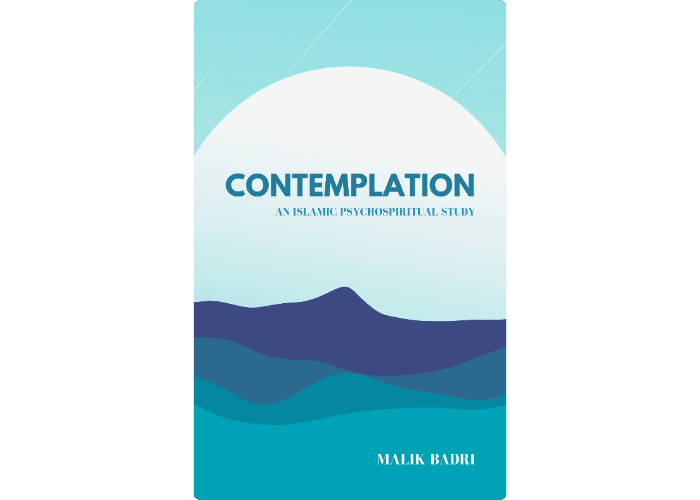

About the Book
Dr. Malik Badri’s Contemplation: An Islamic Psychospiritual Study, bridges the realms of Islamic spirituality and modern psychology. He delves into the Quranic concept of contemplation, presenting it as a psychospiritual exercise that nurtures faith and aligns the heart and mind. Drawing from classical Islamic scholarship and modern psychological theories, Badri critiques secular approaches to the human psyche while advocating for an Islamic framework that integrates the soul and spirituality.
About the Author
Dr. Malik Badri was a Sudanese scholar renowned for his contributions to Islamic psychology. He was a pioneer in integrating Islamic principles with modern behavioral sciences. His work emphasized spiritual dimensions in understanding human behavior, leaving a lasting impact on both Islamic thought and psychology.
Key Insights
Insight 1: Contemplation as a Path to Certainty
Insight 2: Contemplation as a Remedy for Anxiety
Insight 3: The Heart as the Seat of Reflection
Insight 4: The Link Between Reflection and Action
Insight 5: The Call to Individual Reflection
Insight 6: Contemplation and Gratitude
Insight 7: Seeing the Self as a Divine Sign
Insight 1: Contemplation as a Path to Certainty
Certainty is the bedrock of a fulfilling spiritual life, yet it is often elusive in a world filled with distractions, doubts, and fleeting truths. Malik Badri posits that contemplation offers a profound pathway to achieving certainty, transforming mere belief into unwavering conviction. This insight draws heavily on Quranic guidance, prophetic teachings, and centuries of Islamic thought, reminding you that the journey to certainty is one of deliberate reflection and engagement with the world around you.
The Quran describes certainty as an elevated state of faith, one that stems from witnessing the signs of God in creation and understanding their implications. God promises:
“We will show them Our signs in the horizons and within themselves until it becomes clear to them that it is the truth.”
This verse is not just an invitation—it is a guarantee. The more you engage with the signs of God in the universe and within yourself, the more clarity and conviction you will attain. Consider the intricate design of a single leaf, the vast expanse of the night sky, or the miracle of your own heartbeat. Each of these is a testament to the Creator’s wisdom and power, offering undeniable evidence of His presence.
However, certainty is not achieved passively. It requires a proactive commitment to reflection. Dr. Badri emphasizes that contemplation transforms abstract theological concepts into personal experiences. For example, you may believe that God is Al-Razzaq (The Provider), but when you reflect on the ways your needs have been met—often in unexpected ways—you begin to feel this attribute on a deeper level. Certainty emerges when faith moves from your mind to your heart, from knowledge to lived reality.
Badri draws an analogy between contemplation and the process of solving a complex problem. Just as a mathematician works through equations to arrive at certainty, you, too, must work through the signs of God in the world to deepen your faith. This process involves not only observing but also asking questions: Why does the rain fall? What sustains the balance of ecosystems? How does my body function without my conscious control? Each question, when explored sincerely, leads to an answer that reinforces your conviction in God’s design.
The importance of contemplation in achieving certainty is underscored by the Quran’s repeated calls to reflection:
“Do they not reflect upon the camels, how they are created? And the sky, how it is raised?”
These questions are not rhetorical; they are an invitation to engage deeply with the world. The camel, with its ability to thrive in harsh deserts, is not just an animal—it is a marvel of divine engineering. The sky, vast and unyielding, reminds you of your own smallness and God’s greatness. Reflecting on such phenomena shifts your focus from the mundane to the divine, bridging the gap between belief and conviction.
Certainty through contemplation is not limited to the external world. The Quran also points inward, urging you to reflect on your own self:
“And in yourselves. Then will you not see?”
Your body, with its intricate systems and delicate balance, is a miracle in itself. Reflecting on your creation fosters humility and a deeper connection to your Creator. It reminds you that you are not a random occurrence but a deliberate act of divine will.
Imam Ibn al-Qayyim, in his writings on certainty, explains that reflection is one of the most potent tools for cultivating certainty. He compares the heart to a garden that must be irrigated with the waters of contemplation to bear the fruits of conviction. Without reflection, the heart becomes barren, unable to nurture the seeds of faith.
When you consistently engage in contemplation, the world becomes a mirror reflecting God’s attributes. You see His mercy in the provision of food, His wisdom in the laws of physics, and His power in the vastness of the cosmos. This transformative practice ensures that your faith is not just inherited but deeply rooted, capable of weathering doubts and challenges.
Ultimately, contemplation as a path to certainty is a deeply personal journey. It requires solitude, sincerity, and a willingness to question and seek answers. But as Malik Badri and the Quran remind you, the reward is profound: a heart filled with certainty and a life aligned with the divine purpose.
Accept The Challenge!
Don’t just read—take action. Every SowSee summary ends with challenge tasks, helping you turn insights into action—and action into transformation!