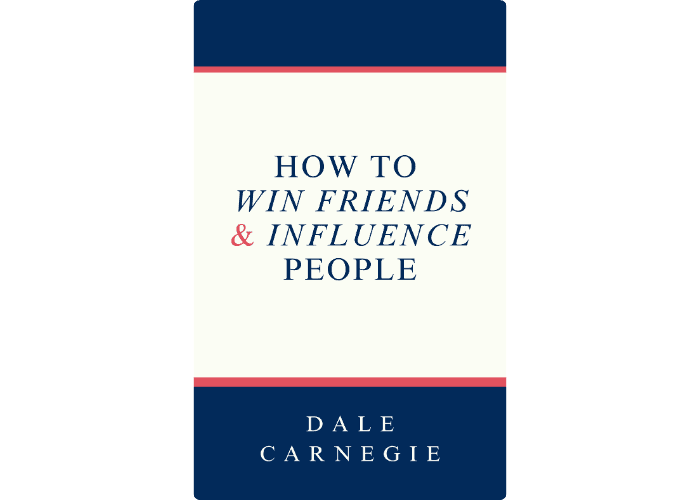

About the Book
Imagine a world where every interaction you have is meaningful, constructive, and leaves both you and the other person better for it. That’s the essence of Dale Carnegie’s How to Win Friends and Influence People. First published in 1936, this classic has endured because it speaks to the timeless nature of human relationships. Carnegie doesn’t just teach you how to get along with people—he transforms the way you approach communication, leadership, and influence.
About the Author
Dale Carnegie (1888–1955) was a pioneer in self-improvement and interpersonal skills. Born into modest means, he worked as a salesman and actor before teaching public speaking. His workshops inspired How to Win Friends and Influence People, one of the most successful self-improvement books of all time.
Key Insights
Insight 1: The Art of Genuine Appreciation
Insight 2: Listen as an Act of Leadership
Insight 3: Smile, the Universal Language
Insight 4: The Danger of Criticism
Insight 5: Win Arguments by Avoiding Them
Insight 6: Admit Mistakes Quickly and Sincerely
Insight 7: Let Others Feel Ownership of Ideas
Insight 1: The Art of Genuine Appreciation
Dale Carnegie’s insight into appreciation cuts to the heart of human relationships: people crave to feel seen, valued, and recognized. He states, “Be hearty in your approbation and lavish in your praise.” But this isn’t just about handing out compliments—it’s about cultivating a mindset that seeks out the good in others and acknowledges it sincerely. Genuine appreciation is transformative, not just for the recipient but also for you as the giver.
In today’s fast-paced world, where interactions often feel transactional, appreciation serves as a bridge to deeper, more meaningful relationships. When you express authentic appreciation, you affirm someone’s worth and contributions. It might be as simple as thanking a colleague for their creativity on a project or acknowledging your friend’s unwavering support during tough times. The key lies in making it personal and heartfelt. Carnegie warns against flattery, which he defines as insincere or exaggerated praise. Flattery is self-serving, but true appreciation is a gift—it centers the other person.
Appreciation also fosters goodwill. When people feel recognized, they’re more likely to respond positively, creating a ripple effect in relationships. This aligns with the Islamic ethos of encouraging good through kind words. The Qur’an commands, “And speak to people kindly”, emphasizing the moral weight of our words. The Prophet Muhammad (peace be upon him) exemplified this principle in his interactions. He praised his companions often, recognizing their unique strengths. For example, he once referred to Abu Bakr (may God be pleased with him) as the most compassionate among his followers and Umar (may God be pleased with him) as the most resolute in truth. These affirmations not only strengthened their resolve but also deepened their bond with him.
When you practice genuine appreciation, you train your mind to focus on positivity. This doesn’t mean ignoring flaws or mistakes but actively choosing to spotlight virtues. Consider a parent dealing with a stubborn child. Instead of constant criticism, they could praise the child’s determination, reframing stubbornness as persistence. This approach fosters mutual respect and encourages better behavior.
From a spiritual perspective, appreciation is deeply tied to gratitude. Gratitude isn’t just a vertical practice directed toward God but also a horizontal one that extends to His creation. When you thank others, you’re indirectly thanking God for placing them in your life. Prophet Muhammad (peace be upon him) said, “Whoever is not grateful to people is not grateful to God”. Recognizing this shifts appreciation from a mere social skill to an act of worship.
Psychologically, genuine appreciation can strengthen relationships by building trust and mutual respect. Research in positive psychology shows that expressing gratitude enhances emotional well-being for both the giver and the receiver. Carnegie’s principles align with this: when you praise someone, you uplift their spirit and reinforce a bond of goodwill.
Practically, you can implement this by making appreciation specific. Don’t just say, “Great job.” Instead, say, “Your dedication to this project was incredible—I noticed how much effort you put into ensuring every detail was perfect.” Specificity conveys authenticity.
In Islamic tradition, the companions often expressed appreciation for one another, reinforcing bonds within the community. For instance, after the Battle of Badr, Prophet Muhammad (peace be upon him) publicly praised individuals for their bravery, creating an environment of encouragement and collective motivation.
To apply this insight, start small. Each day, identify at least one person you can genuinely appreciate. Take the time to notice their contributions, however minor they may seem, and express your gratitude. Whether it’s a thank-you to a spouse for preparing a meal or a compliment to a colleague for their teamwork, these acts of appreciation accumulate, creating an atmosphere of positivity and mutual respect.
Ultimately, appreciation is a choice. It’s the decision to look beyond imperfections and see the beauty in others. As you embrace this practice, you’ll find that it doesn’t just transform your relationships—it transforms you. It molds you into someone who uplifts, encourages, and spreads goodness, embodying the best of both Carnegie’s principles and Islamic ethics.
Accept The Challenge!
Don’t just read—take action. Every SowSee summary ends with challenge tasks, helping you turn insights into action—and action into transformation!